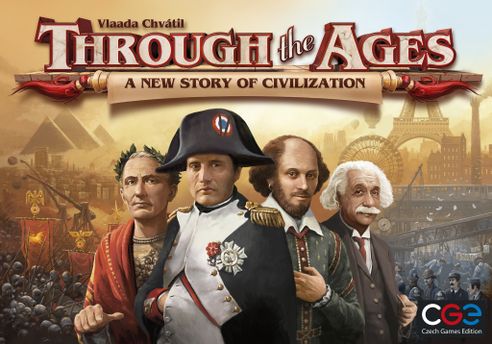
 A spreadsheet so mathematically flawless it practically builds pyramids inside your brain.
Right, if you have ever played Sid Meier’s Civilization on a computer, you understand the fundamentally intoxicating thrill of guiding a scrappy group of bronze-age peasants straight through history until they are enthusiastically launching uranium at Gandhi. Through the Ages attempts to condense that exact sweeping, deeply complex historical timeline onto a purely cardboard format. And to achieve this impossible task, they essentially removed all the actual maps, all the geography, and all the plastic miniatures, replacing them entirely with a staggeringly massive row of continually shifting cards and cubes. It is an act of pure, unadulterated euro-game madness, and it works flawlessly.
You are managing agriculture, science, military production, political corruption, and citizen happiness. The sheer volume of interlocking resources is agonizing. If you increase your food production to feed a massive army, you suddenly find yourself short on raw materials to build a theatre. If you ignore the theatre, your citizens become depressed and actively riot, completely stalling your civilization! It is arguably the tightest, most unforgiving engine-building puzzle in existence. And the entire game is driven by a card row. You are desperately drafting leaders, technologies, and wonders before your opponents snap them up. The feeling of finally drafting Winston Churchill directly into your hand right as a massive global conflict breaks out is incredibly empowering.
But the military! My word, the military track in this game is terrifying. Even though there is no physical map, the threat of aggression is constant. If you ignore your military strength to focus on writing polite poetry and building libraries, the player next to you will draft a brutal aggression card, calculate that they have exactly one more swordsman than you, and aggressively steal all of your hard-earned iron. It forces a deeply tense, Cold War-style arms race throughout the entire game, ensuring you can never quite relax even while building the Taj Mahal.
Family Session vs. Hardcore Gamers
Do not even consider playing this with a sensible, normal human family. To successfully play Through the Ages, you must effectively dedicate a minimum of five grueling hours and possess the patience of a saint. The rulebook is basically a minor thesis. Tracking your corruption and science accumulation manually using tiny plastic cubes borders on tedious. This is exclusively, fiercely designed for two to four hardcore spreadsheet-loving gamers who relish the opportunity to completely drain their mental faculties over a long, sweaty weekend.
Pros:
- A truly epic, monumental feeling of progression from the bronze age to the modern era.
- The tension between balancing culture, resources, and military arms races is flawless.
- Every single game feels like a totally distinct, sprawling historical narrative.
Cons:
- The playtime is punishingly long; a four-player game will easily take five hours.
- The sheer amount of physical cube pushing and tracking is extremely fiddly and prone to errors.
- Falling behind in early military strength usually locks you into four hours of misery.
Final Verdict: Buy it yourself... but honestly, strongly consider just downloading the digital app instead. The physical board game is a brilliant, undisputed masterpiece of design, but the automated digital version calculates the crushing bookkeeping instantly, saving you from a significant headache.