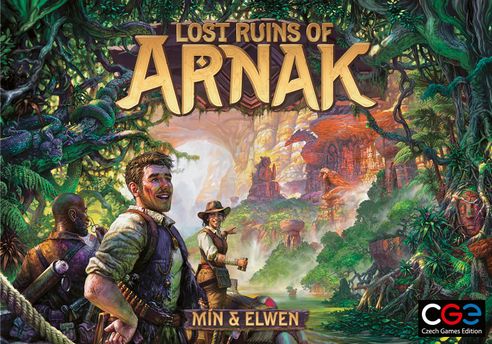
 Indiana Jones the Board Game, if Indiana Jones spent most of his time carefully managing his fear of large birds.
Right, pop on your fedora and grab a machete. Lost Ruins of Arnak is explicitly designed to tap into every single pulp-adventure childhood fantasy you’ve ever had. You are an intrepid explorer crashing onto an uncharted, lush island filled with ancient stone temples, massive mythological guardians, and a suspicious amount of incredibly valuable red rubies casually lying around in the dirt. It looks thrilling! It looks like an action movie! But beneath the absolutely stunning, verdant jungle artwork is one of the tightest, most brain-burning resource management euro-games of the decade.
The core loop is a brilliant marriage of deck-building and worker placement. You have a hand of extremely pathetic starting cards. You use these cards to physically fund an expedition across the island, placing your tiny wooden archaeologists onto newly discovered dig sites. The sheer satisfaction of paying two compasses to aggressively hack into the deep jungle, only to reveal a pristine ancient temple space that immediately rewards you with a gold coin and an arrowhead, is deeply addictive. But there is a catch. Whenever you discover a new site, you simultaneously wake up an absolutely massive, terrifying guardian monster.
If you do not physically defeat the guardian by the end of the round using an incredibly specific combination of ancient spearheads and boots, it gives your character a "Fear" card. Fear cards aggressively clog up your deck with complete, unplayable misery. You don’t die, you just become so hopelessly terrified of a giant cardboard snake that your entire logistical supply chain collapses! Your ultimate goal? Climbing the massive research track on the side of the board. Watching an opponent aggressively leapfrog your magnifying glass to steal the sole remaining golden idol at the top of the temple is enough to incite actual physical violence across the table.
Family Session vs. Hardcore Gamers
Is it a family game? Spectacularly, yes! Do not let the "heavy euro" classification fool you. Because you are only ever performing one simple main action at a time, the turns are lightning-fast. The theme is so heavily baked into the components—trading stone tablets for airplane rides—that it naturally makes sense to casual players. Your hardcore gaming friends, however, will entirely ignore the beautiful artwork and spend two hours in total silence mathematically calculating exactly how to squeeze 14 points out of a single piece of cardboard jewelry. It flawlessly caters to both crowds!
Pros:
- The hybrid deck-building and worker-placement mechanics are seamlessly, brilliantly integrated.
- The component quality is utterly premium, featuring actual physical plastic rubies and tablets.
- Lightning-fast turns guarantee almost absolutely zero downtime or analysis paralysis.
Cons:
- The deck-building feels incredibly slow; you only cycle your deck perhaps four times total.
- Climbing the research track is mathematically mandatory to win, limiting strategic paths.
- Despite the adventurous theme, players will quietly stare at their player boards for 80% of the game.
Final Verdict: Buy it yourself. It is the absolute quintessential entry-level heavy game. Whether you want to aggressively fight ancient jungle monsters or simply build a heavily optimized spreadsheet of ancient artifacts, it delivers one of the most mechanically satisfying puzzles on the market right now.